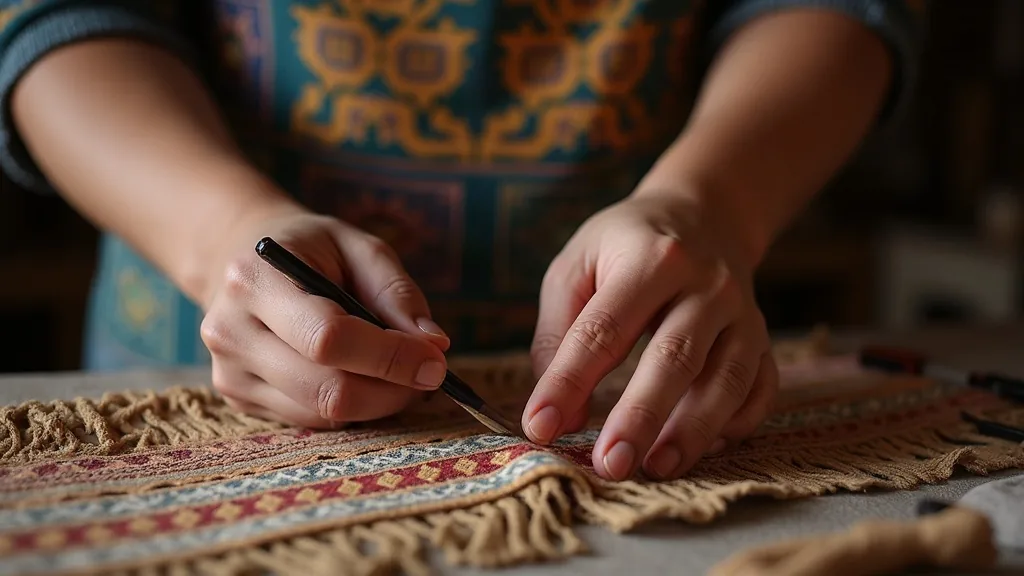
A Sumba luxury ikat village tour is a private, translator-guided day among the weaving households of Prailiu, Rende and Kaliuda in East Sumba, or the Lamboya and Kodi weavers in the west, by 4×4 from your lodge. Indonesia Juara Trip adds it to any 3D2N-8D7N itinerary, with permits, a natural-dye demonstration and fair-price coaching included; totals are always quoted.
What does a Sumba luxury ikat village tour include?
Ikat on Sumba is a household craft, not a factory product: the loom sits under the clan house and the finest cloths take months. A guided visit is therefore not a market stop: you are received as a guest, shown the process, and free to buy from the maker or leave without pressure.
Every module arranged by Indonesia Juara Trip includes:
- A licensed private guide who speaks English and the local speech of the village (East Sumba’s Kambera differs from Kodi and Lamboya), working under the guide standards of Law No. 18 of 2025, in force since 29 October 2025.
- A luxury-tier 4×4 with driver, cooler box and onboard Wi-Fi where coverage allows.
- Village entry permits and household courtesy gifts, paid on your behalf and itemised.
- A natural-dye demonstration, ethical-buying coaching, and a drone-free, photo-with-permission protocol agreed with the household head.
Lodge nights are never inside the module price. From NIHI Sumba or Lelewatu in Wanokaka, West Sumba, or Cap Karoso in Kodi, the day starts and ends at your villa.
Which villages do we visit in East and West Sumba?
East Sumba produces the cloths collectors know: the hinggi (men’s wrap) and lau (women’s tube skirt) with horses, skull trees, shrimp and crocodiles in indigo and morinda red. The west weaves too, but its cloths are plainer and its villages are better known for megaliths and Pasola.
| Village | Region | What you see | Indicative access (2026) | Entry / courtesy |
|---|---|---|---|---|
| Prailiu | East Sumba, edge of Waingapu | Royal compound, carved tombs, weavers selling direct | 10-15 minutes from Waingapu (WGP) | Village permit, plus household gift |
| Rende (Rindi) | East Sumba, southeast of Waingapu | Megalithic tombs, hinggi with royal motifs, dye pots | About 1.5-2 hours from Waingapu | Village permit |
| Kaliuda | East Sumba, Pahunga Lodu | Fine-thread weaving, long dye cycles, few visitors | About 2.5-3 hours from Waingapu | Village permit |
| Lamboya and Kodi weavers | West and Southwest Sumba | Simpler cloths beside high-roofed Kodi houses | 30-60 minutes from the Wanokaka lodges; 30-45 minutes from Cap Karoso | Ratenggaro permit |
Drive times are indicative: the newly paved highway reported in the 2026 Lombok-Sumba-Sumbawa investment review crosses the island in under four hours, but the last lanes into each village still need the 4×4.
Half-day, full-day or two-day collector module?
| Module | Duration | Best base | Stops | Price components (quoted on request) |
|---|---|---|---|---|
| Half-day taster | 4-5 hours | Waingapu (East) or Cap Karoso (Kodi) | Prailiu or one Kodi household; dye demonstration; short buying session | Luxury 4×4, pro-rated; translator-guide; permits |
| Full ikat day | 8-10 hours | Waingapu, or the Wanokaka lodges via the cross-island road | Prailiu and Rende, or Rende plus Walakiri mangrove sunset; lunch in Waingapu | Luxury 4×4; translator-guide; permits; lunch |
| Two-day collector module | 2D1N | Any lodge, with one night in Waingapu | Prailiu, Rende and Kaliuda; second-morning return to shortlisted households | Two days of 4×4 and guide; Waingapu hotel at published tariff; permits |
Each module is quoted per booking and priced on top of whichever duration page you start from. For reference, IndonesiaJuara’s Sumba Private Trip 4D3N is priced from USD 390 per person (8 guests) to USD 700 per person (2 guests), depending on group size, with hotel twin share, entrance fees and meals included, per its table labelled 2025, as listed on IndonesiaJuara (checked 2026-09-16). Indonesia Juara Trip’s Sumba Private Trip 6D5N is listed at USD 570–1,020 per person depending on group size (USD 1,020 for 2 guests, USD 570 for 8 guests), including twin-share hotel, entrance fees and 15 meals, in its 2025 USD price table, as listed on Indonesia Juara Trip (checked 2026-09-16).
How does the natural-dye demonstration work?
- Tying. Bundles of hand-spun warp thread are bound with palm-leaf or plastic strips wherever colour must not reach; the motif is planned in the weaver’s head.
- Indigo. Repeated dips over weeks build the blue-black ground; the vat smells of fermentation and lime.
- Morinda root. The red needs an oil treatment first and many baths afterward; a deep red can take a whole dry season.
- Weaving. Only once the dyes are set is the cloth woven on a back-strap loom, then two panels are stitched together for a hinggi.
A village with no indigo vat is buying pre-dyed thread, which is legitimate but should be priced accordingly.
What is a fair ikat price in 2026?
The grades below are what our concierge uses for coaching; thread, dye and a named master weaver move the asking price. Check any price with your guide on the day.
| Cloth type | Typical size | How to check |
|---|---|---|
| Machine-thread scarf, synthetic dye | 40 x 150 cm | Uniform colour, no dye smell, identical pieces stacked |
| Hand-woven hinggi, synthetic or mixed dye | 110 x 250 cm | Irregular motif edges; colours brighter than natural |
| Hand-woven hinggi, full natural dye | 110 x 250 cm | Warm rust red, deep blue-black, faint morinda smell |
| Master-weaver or heirloom hinggi | 120 x 260 cm | Weaver named, months to years of work, often not for sale |
Ethical buying rules our guides apply: bargain once, respectfully, then decide, since underpaying removes the reason to keep natural dyeing alive. Pay the weaver, not a middleman, and keep the handwritten receipt your guide prepares for customs.
What etiquette applies in weaving villages?
- No drones. Guidance updated in January 2026 bars recreational drones over villages, temples and ritual grounds, within 30 m of people and buildings, and within 15 km of airports, which already covers Prailiu.
- Ask before photographing a weaver’s face or an unfinished cloth; motifs can carry clan meaning.
- Village fees are separate from the roughly 10% accommodation levy reported from 1 January 2026; they stay with the household.
How does booking the ikat add-on work?
- Choose your duration page (3D2N to 8D7N) and region. East modules suit itineraries using Waingapu, easier since TransNusa announced direct Denpasar-Waingapu flights in June 2026.
- Message “Add ikat day” on WhatsApp with dates, lodge and whether you are browsing or collecting.
- Receive a written quote, usually within one working day, itemising guide, 4×4, permits and any Waingapu night; lodge nights at each property’s published tariff plus tax and service.
- Confirm with a deposit. The concierge then books the households; master weavers travel for funerals and rituals and need notice.
- On the day, the guide carries permit cash and receipts; you carry rupiah for purchases.
> Add an ikat day to your Sumba itinerary. Indonesia Juara Trip is an independent concierge: guide, 4×4, permits and household visits are arranged through vetted licensed partners; lodges are booked at their own published tariffs. WhatsApp +62 811-9941-919 with “Add ikat day” and your dates, or email sales@indonesiajuara.asia. Every total is subject to change and confirmed as a quote.
Frequently Asked Questions
Where can I see ikat weaving in Sumba?
The finest ikat is woven in East Sumba: Prailiu on the edge of Waingapu, Rende about 1.5-2 hours southeast, and Kaliuda in Pahunga Lodu. West Sumba weavers around Lamboya and Kodi work closer to NIHI, Lelewatu and Cap Karoso, but their cloths are plainer. Choose east for collecting, west for a short cultural stop.
Can I visit traditional ikat villages without feeling intrusive as a tourist?
Yes, if the visit is arranged ahead with the household rather than walked into. Your guide asks the family head for permission, pays the permit and courtesy gift, and tells you when photographs are welcome. Sitting with a weaver for an hour and buying one cloth at a fair price is welcomed; a five-minute photo stop is what feels intrusive.
Should I bring cash for local villages during my guided Sumba tour?
Yes. Village permits, courtesy gifts and cloth purchases are all paid in rupiah; villages have no card terminals and patchy signal. Your guide carries the permit cash and gives receipts, but bring your own notes for purchases, withdrawn in Waingapu or Tambolaka beforehand.
How can I include ikat weaving villages in a Sumba luxury itinerary without making it too rushed?
Give the villages a whole day, not a stop between waterfalls. On a 3D2N or 4D3N trip based in the west, take the half-day Kodi or Lamboya module. From 5D4N upward, cross to Waingapu for a full East Sumba day, or add the 2D1N collector module with a Waingapu night so you can return to a household the next morning.